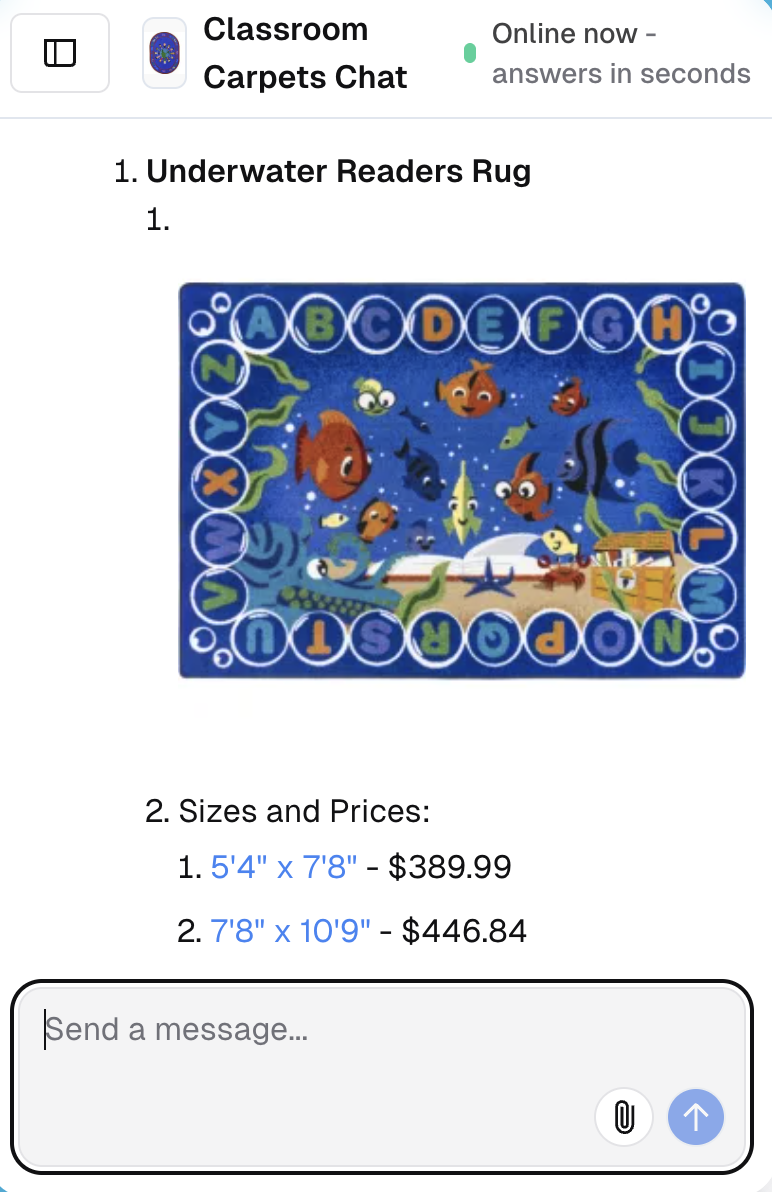
Step 1
Visitor asks a real product question
Website or store AI becomes the first serious response surface.
Applied AI systems for customer-facing work
We design applied AI for commerce, messaging, scheduling, events, voice, and operations.
The work is not about adding one chatbot. It is about making the full customer workflow behave coherently across the channels a business already runs.
System evidence
Commerce
Product questions become shopping guidance
SellBot and website chat move the first answer closer to the moment of purchase.
Handoff
The conversation leaves the browser cleanly
AiMLText carries qualified intent into text, team follow-up, and operational next steps.
Follow-through
Scheduling, events, and payment stay connected
The system continues after the first answer instead of dropping the customer into a dead end.
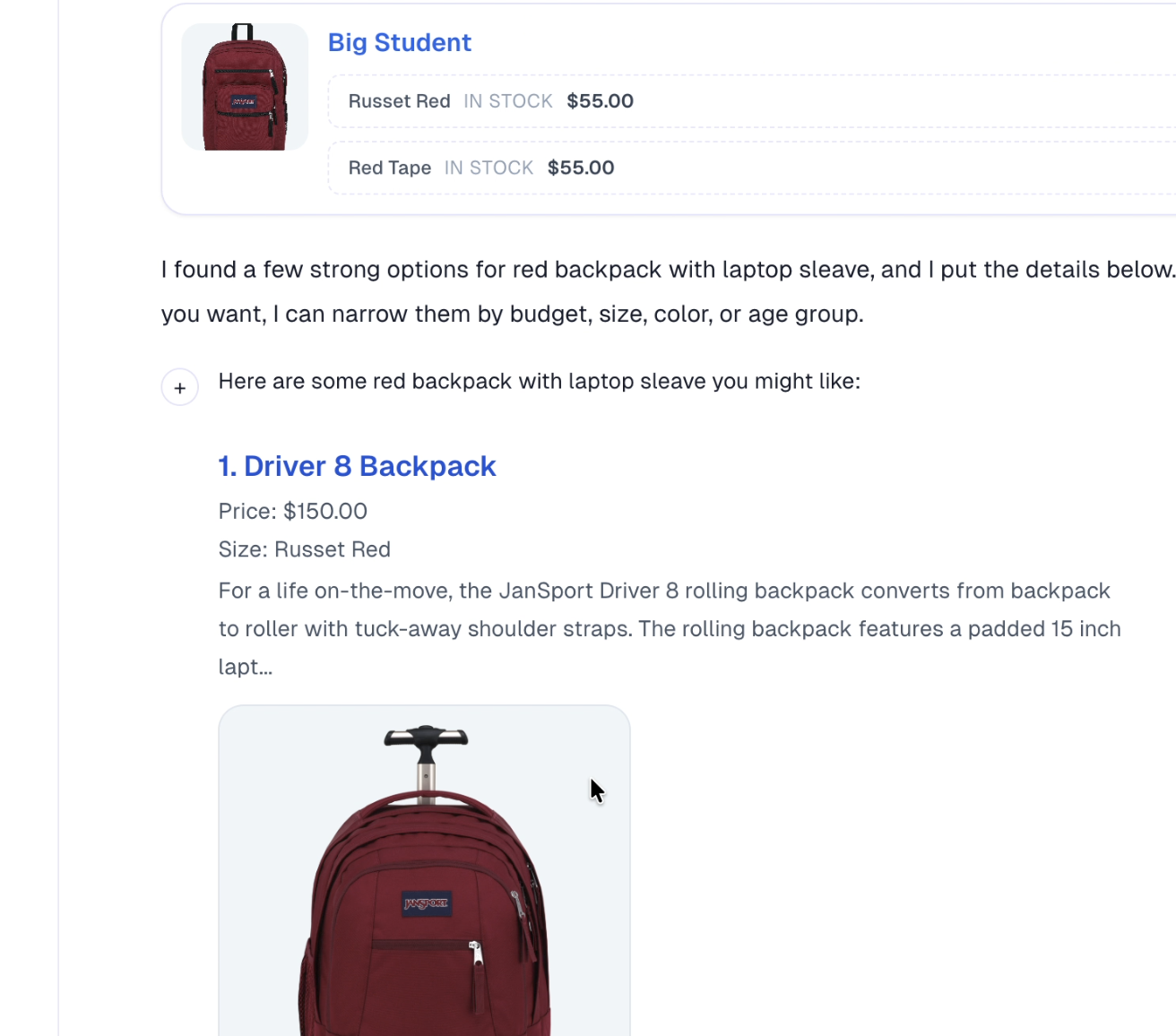
Commerce surface
Product discovery framed like shopping, not support.
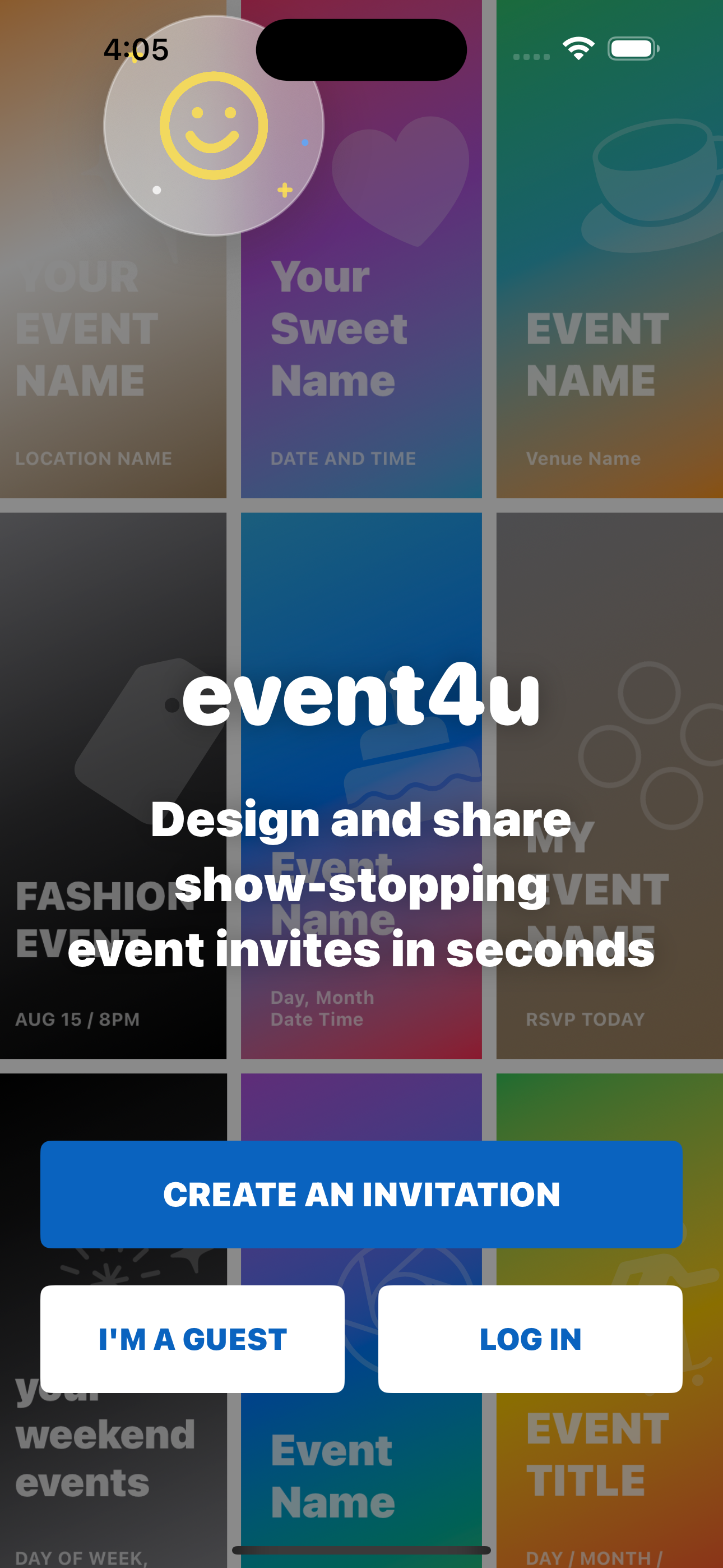
Event workflow
Invitations, guest updates, and event follow-through in one flow.
System map
Each system owns a real business surface. Together they describe how AI enters the conversation, how humans take over when needed, and how the next operational step stays connected.
Commerce
AI for product discovery, shopper questions, website conversion, and the first commercial answer.
Messaging and handoff
Carry qualified intent from AI into human response, team routing, SMS, WhatsApp, and follow-up.
Scheduling and events
Turn buyer or guest intent into appointments, RSVPs, coordination, and operational next steps.
Voice and transcription
Extend customer context into calls, speech, and operational signal from audio.
Platform and operations
Persistent memory, verification, durable workflows, and applied system architecture behind the product layer.
Example workflow
Step 1
Visitor asks a real product question
Website or store AI becomes the first serious response surface.
Step 2
The system qualifies and routes intent
Qualified demand moves into messaging, teams, or a next-step workflow.

Step 3
Scheduling, events, or payment stay attached
The conversation remains operational instead of fragmenting across tools.
How AIML Labs builds
AIML Labs treats applied AI as infrastructure for customer-facing work. The important question is not whether a model can answer. It is whether the business can trust the system around the answer.
That means clear boundaries, operational handoff, workflow continuity, and policy-aware channel behavior.
A useful AI surface must know where automation stops and where an operator, seller, or support lead should take over.
We design around explicit system boundaries so customer context stays attached to the workflow without pretending every tool should see everything.
Applied AI work needs durable review paths, auditability, and practical checks before it earns operational trust.
The standard is not whether a model can answer once. The standard is whether the system survives real traffic, real customers, and real business constraints.
Messaging, events, support, and customer outreach all carry channel-specific requirements that have to be built into the workflow, not bolted on later.
Latest work
The homepage should show what is being built and learned now, not just broad claims about AI.
Partnership story
Bailey's workmanship meets a turnkey system managed by AiML Labs: website, AI marketing, phone systems, SMS, Messenger, networks, and forms.
Current product work
Operational product work around messaging consent, proof pages, and verification-readiness for live event communication.
Product surface
Commerce chat designed so the first answer feels like shopping guidance instead of support deflection.
Engineering system
A practical email-tracking extension and backend flow built around real sync, delivery, and operational constraints.
Platform direction
The platform layer behind durable memory, approvals, verification, and connected business execution.
Research note
Research writing on policy-distilled systems, verifier alignment, and what actually carries reliability.
Contact
The useful design question is where AI should answer, where a person should take over, and how the next business step stays attached across channels.